

Hear from Our Customers
You can’t fix what you can’t see. That’s the problem with mold in Hood, PA homes—it hides in walls, under floors, behind appliances, and in crawl spaces where moisture gets trapped. By the time you see visible growth, the problem’s usually bigger than you think.
Professional mold testing gives you the full picture. We use infrared cameras and moisture meters to detect temperature differences and hidden dampness that signal mold growth before it becomes visible. Air sampling and surface testing identify the species, the concentration, and whether it’s actively spreading. Lab analysis confirms what you’re dealing with so there’s no guessing.
This isn’t about scaring you. It’s about knowing. Because once you know where the mold is, what type it is, and what’s feeding it, you can make an informed decision about what happens next. That’s worth more than any DIY kit or surface-level inspection.
We’ve been serving Hood, PA and the surrounding Bucks County area with certified mold inspections and remediation services for years. We’re not a national franchise that shows up with a checklist. We’re local, we know how homes are built here, and we understand the moisture issues that come with this region’s climate.
Older homes in Hood—especially those with plaster walls, brick basements, and poor ventilation—trap moisture in ways modern construction doesn’t. We’ve inspected hundreds of properties in Bucks County, and we know where to look. Our team uses state-of-the-art equipment, follows strict testing protocols, and works with third-party labs to give you accurate, actionable results.
You’re not just getting a report. You’re getting clarity, a plan, and someone who’ll walk you through what it all means.
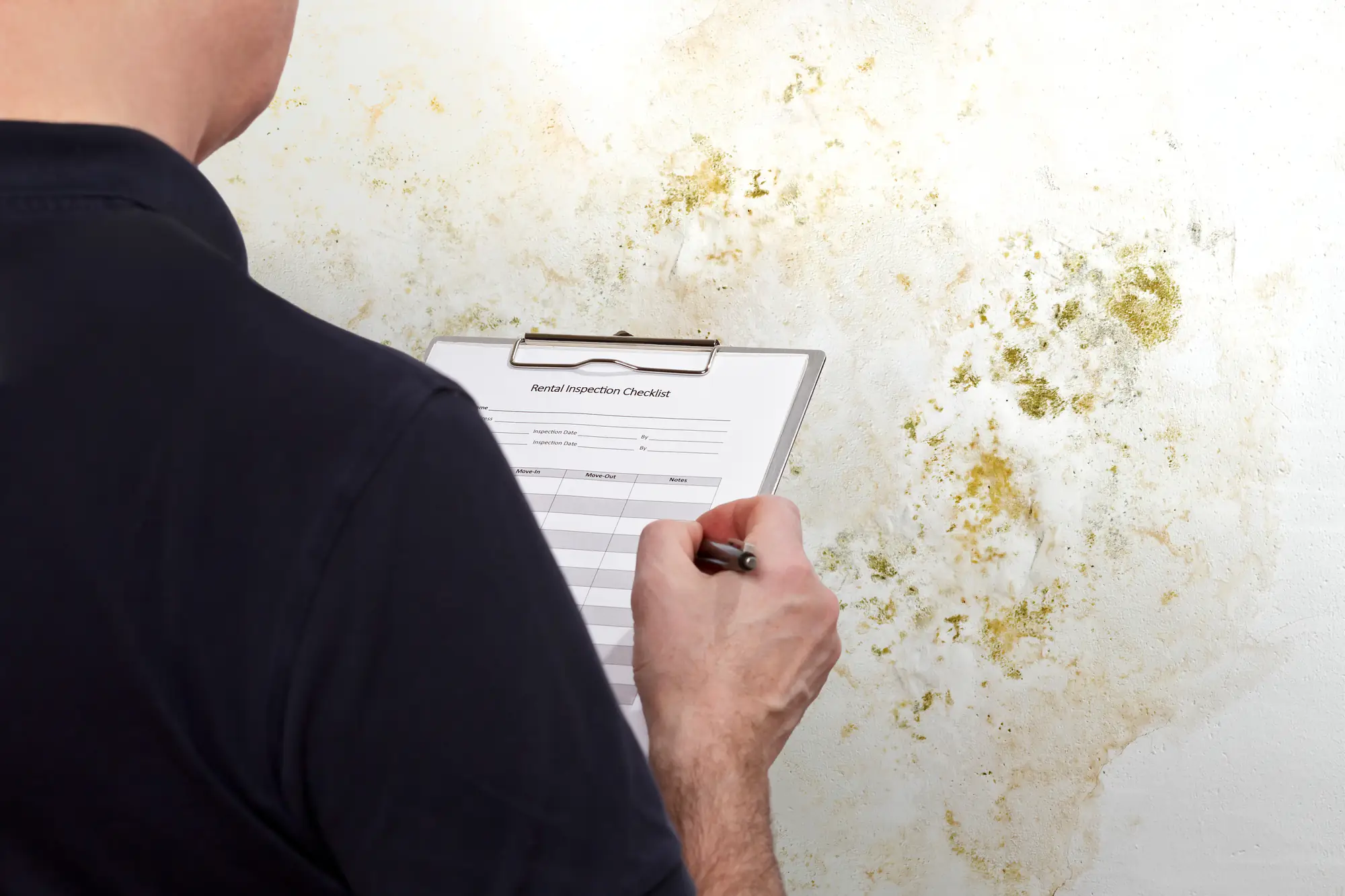
We start with a free consultation to understand what you’re seeing, smelling, or concerned about. Then we schedule a thorough on-site inspection at a time that works for you.
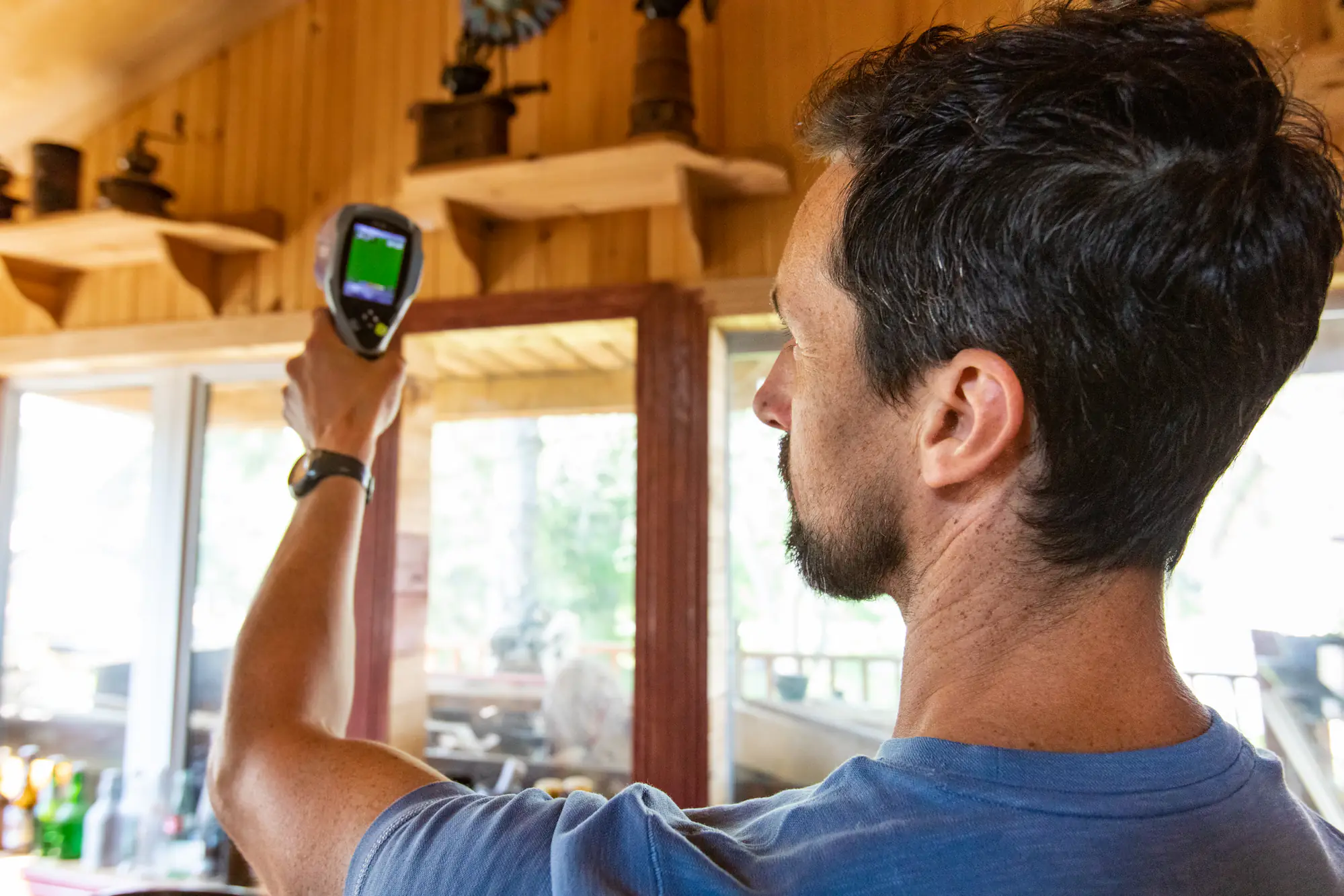
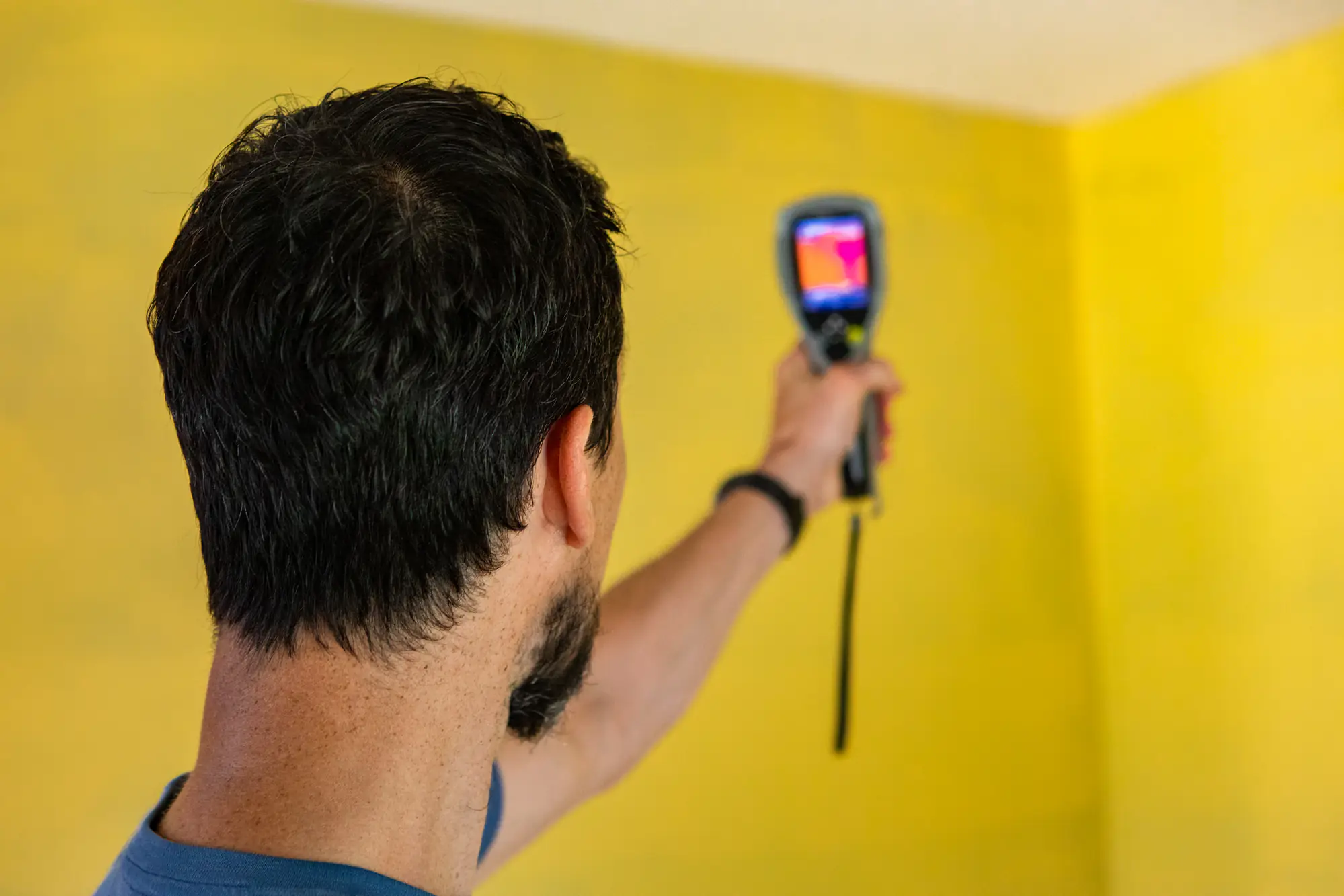
During the inspection, we examine visible areas and use infrared cameras to scan walls, ceilings, and floors for temperature anomalies that indicate trapped moisture. Moisture meters help us measure humidity levels and identify problem zones. We take air samples from multiple rooms to measure airborne mold spore counts, and we collect surface samples from areas of visible growth or suspected contamination.
All samples go to an independent, certified lab for analysis. Within a few days, you’ll receive a detailed report that identifies mold species, concentration levels, and contamination sources. We review the results with you in plain language—no jargon, no upselling. If remediation is needed, we explain what that looks like, what it costs, and how we’ll prevent it from coming back. If it’s minor and manageable, we’ll tell you that too.
Ready to get started?
Every mold inspection includes a visual assessment of your property, moisture mapping with professional-grade meters, infrared thermal imaging to detect hidden moisture, air quality sampling from multiple locations, and surface sampling where growth is visible or suspected. All samples are sent to a certified third-party lab for species identification and spore count analysis.
You’ll receive a comprehensive written report that breaks down findings by room, identifies mold types (including black mold, which is Stachybotrys chartarum), and includes lab results with clear explanations. We also provide a consultation to review results, answer your questions, and recommend next steps if remediation is necessary.
In Hood, PA and throughout Bucks County, we see recurring issues tied to basement moisture, old HVAC systems, and poor attic ventilation. Homes built before 1980 are especially vulnerable because they weren’t designed with modern moisture barriers. We factor that into every inspection. If your home has a history of water damage, leaks, or flooding, we pay extra attention to those areas because that’s where mold takes hold and spreads.
Mold testing costs in Hood, PA typically range from $300 to $700 depending on the size of your home and how many samples we need to collect. A standard inspection for a single-family home usually falls around $400 to $500. That includes the on-site inspection, air and surface sampling, lab analysis, and a detailed report with results.
If you have a larger home, multiple levels, or specific areas of concern that require additional sampling, the cost may be higher. We provide upfront pricing during your free consultation so there are no surprises. Some companies charge separately for the inspection and lab fees—we include everything in one clear price.
If remediation is needed, the inspection cost is often a small fraction of what you’d spend fixing a problem that’s been ignored. Early detection saves money. A $400 test today can prevent a $10,000 remediation job six months from now.
A mold inspection is the visual assessment—we walk through your home, look for visible growth, check moisture levels, and use infrared cameras to find hidden problem areas. Mold testing goes a step further by collecting air and surface samples that get analyzed in a lab to identify the species and measure contamination levels.
You can have an inspection without testing, but you can’t get accurate testing without an inspection. The inspection tells us where to sample. The testing tells us what we’re dealing with and how serious it is.
Most homeowners in Hood, PA benefit from both. If you’re buying a home, dealing with health symptoms, or preparing for remediation, testing is essential. It gives you documentation, confirms the scope of the problem, and provides a baseline for post-remediation verification. If you just want peace of mind or a professional opinion, an inspection may be enough.
You can, but it won’t give you the full picture. DIY kits test one small area or collect a single air sample, which doesn’t account for how mold spreads or where it’s hiding. Mold growth is rarely isolated to one spot—it’s usually connected to a moisture source that’s affecting multiple areas.
DIY kits also don’t include a professional inspection, so you’re missing the context. You might get a result that says “mold detected,” but you won’t know what type, how much, where it’s coming from, or what to do about it. Some kits produce false positives because they pick up harmless outdoor spores that are always present in the air.
Professional mold testing includes a trained inspector who knows where to look, how to sample correctly, and how to interpret lab results in the context of your home’s construction and moisture history. If you’re serious about understanding the problem, a DIY kit won’t cut it. It’s like using a thermometer to diagnose the flu—it gives you one data point, but it doesn’t tell you what’s wrong or how to fix it.
Most residential mold inspections in Hood, PA take between one and two hours depending on the size of your home and the extent of the suspected contamination. We’re thorough, but we’re not going to waste your time. If you have a smaller home or a specific area of concern, it may take less time. Larger homes or properties with basements, attics, and crawl spaces take longer.
During that time, we’re visually inspecting all accessible areas, using moisture meters and infrared cameras, taking air samples from multiple rooms, and collecting surface samples where needed. We also ask questions about your home’s history—past leaks, water damage, HVAC issues—because that context helps us understand what we’re seeing.
Lab results typically come back within three to five business days. Once we have the report, we’ll schedule a follow-up call or meeting to review findings and discuss next steps. The whole process from inspection to results usually takes less than a week.
Yes. That’s one of the main reasons to get professional mold testing. The lab results will show what types of mold are present, the concentration levels, and whether they exceed safe thresholds. If the results indicate elevated levels of toxic mold species like Stachybotrys (black mold) or high spore counts in living areas, remediation is necessary.
We’ll walk you through the results and explain what they mean in plain language. If remediation is needed, we’ll outline what that involves, how long it takes, and what it costs. If the contamination is minor and limited to a small area, we’ll tell you that too—and explain whether you can handle it yourself or if it’s better to bring in professionals.
The goal isn’t to upsell you on services you don’t need. The goal is to give you accurate information so you can make the right decision for your home and your family. Some situations require full remediation with containment and air filtration. Others just need a targeted cleanup and moisture control. Testing gives you the data to know which one applies to you.
If we find mold during the inspection, we document it, take samples, and send them to the lab for analysis. The lab report will confirm the species, measure the concentration, and help us determine the severity. From there, we provide a clear remediation plan that addresses the contamination and the moisture source feeding it.
Remediation typically involves containment to prevent spores from spreading, removal of contaminated materials, HEPA filtration to clean the air, and antimicrobial treatment of affected surfaces. We also identify and fix the underlying moisture problem—whether that’s a leak, poor ventilation, or drainage issue—because mold will come back if the conditions that caused it aren’t corrected.
In Hood, PA, we often see mold in basements due to groundwater seepage, in bathrooms with inadequate exhaust fans, and in attics with roof leaks or condensation buildup. Once we know where it is and what’s causing it, we can fix it for good. You’ll also receive post-remediation testing to verify that spore levels are back to normal and the problem is resolved.
Other Services we provide in Hood